Do Infants Smile Like Adults?
Mapping emotional development with deep learning
06
Year — 2025
Categories
Role
- MSc project — University of Edinburgh
- Age-estimation module & cross-age evaluation (team of 3)
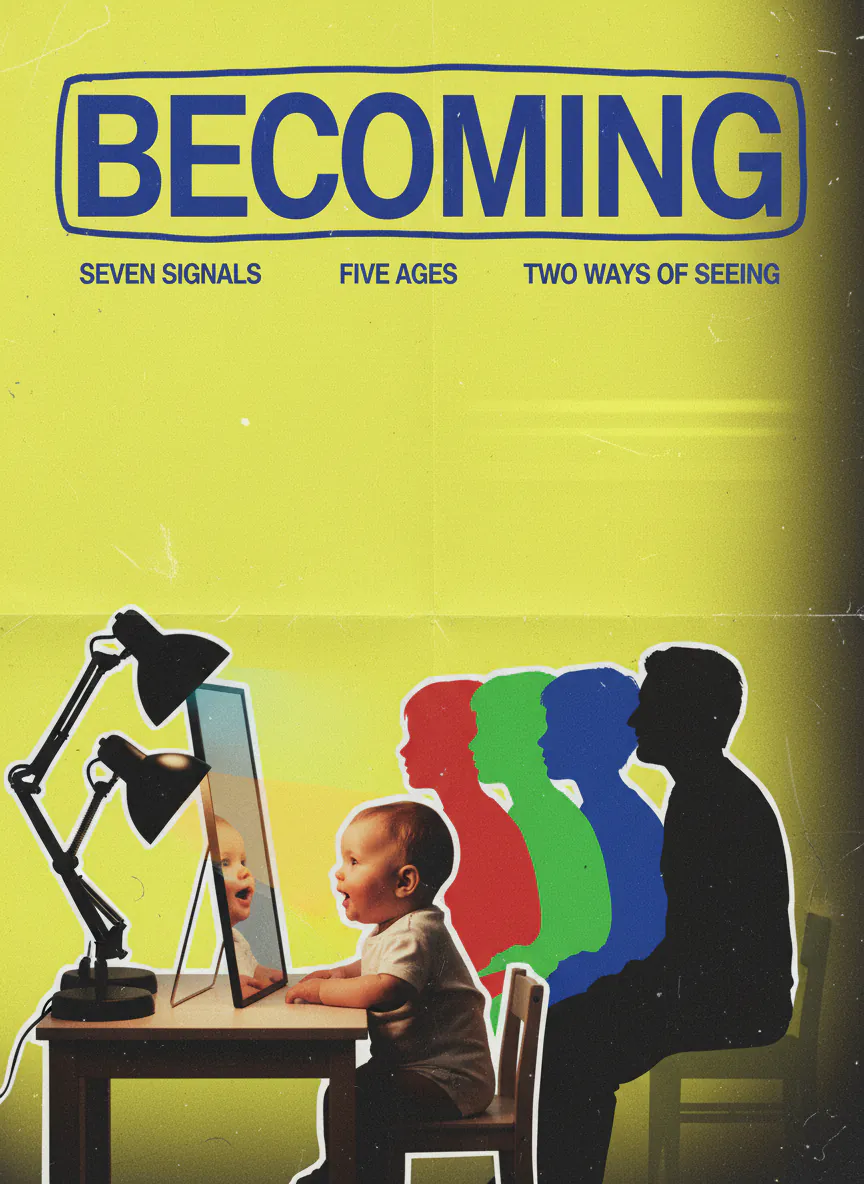
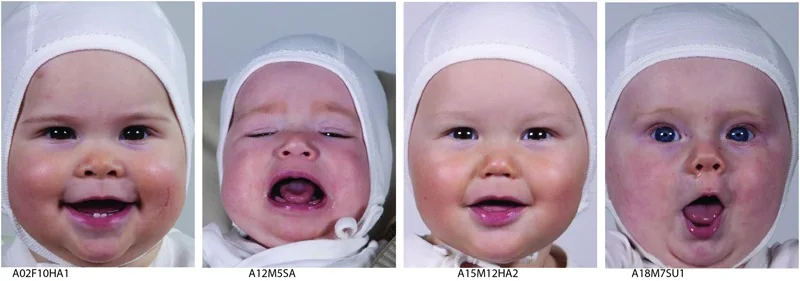
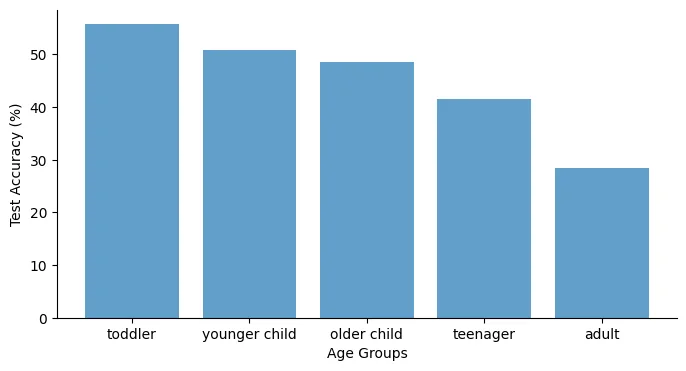
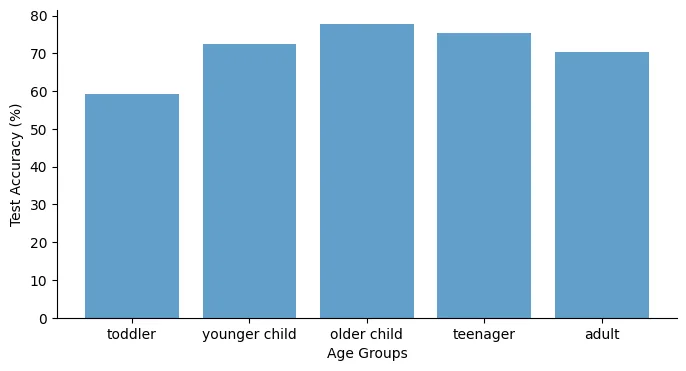
A smile at nine months and a smile at thirty look similar — but do they mean the same thing to a machine? One ResNet was trained purely on infant expressions, another purely on adult faces, and both were tested across five developmental stages. Their disagreement is the finding: infant expressiveness fades linearly with age, while adult-like expression emerges nonlinearly — crystallising not in adulthood, but in late childhood.
Problem
Facial expressions are an infant’s first language — the channel through which they signal needs, and an early window into developmental health. Yet nearly all emotion-recognition research is built on adult faces, and developmental psychology lacks measurable tools for pinpointing when a child’s expressions become adult-like. Atypical expression patterns can be early indicators of developmental disorders; the question is practical, not just philosophical.
Approach
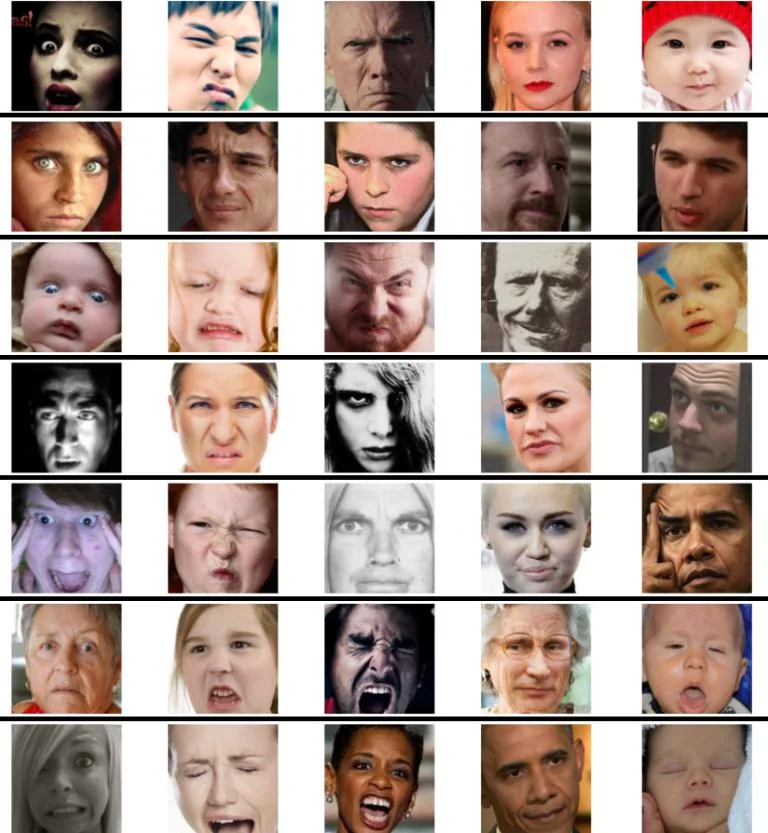
The networks were treated as instruments of measurement rather than products. Where the infant-trained model succeeds, faces still carry infant features; where the adult-trained model succeeds, adult-like expression has emerged — classification accuracy repurposed as a developmental ruler.
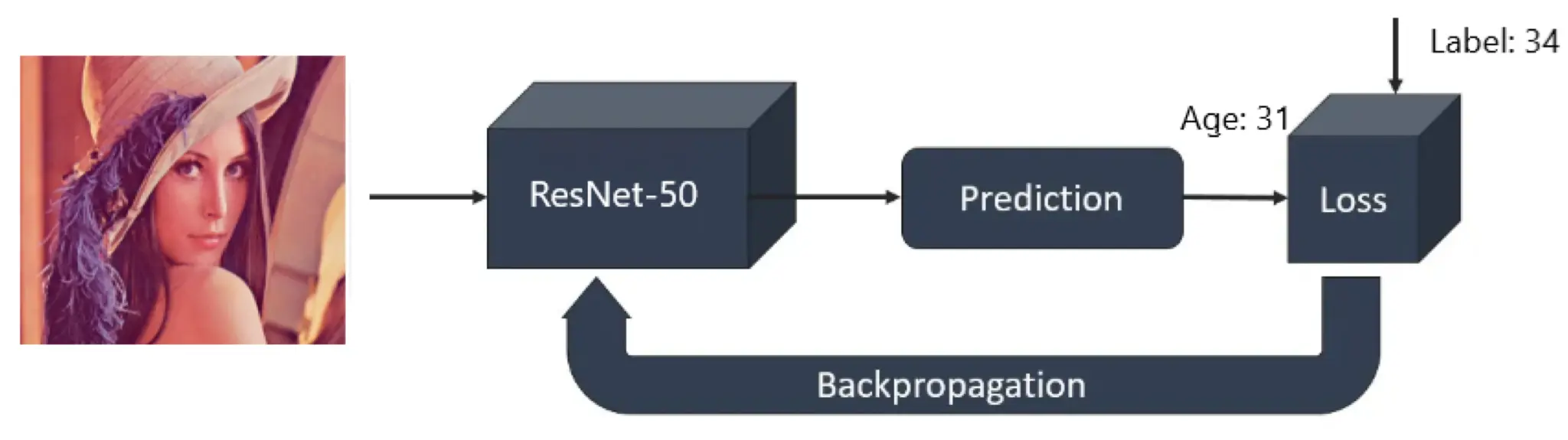
Because AffectNet carries no age labels, a pretrained ResNet-50 age estimator segmented 26,270 images into five developmental brackets. Both classifiers combined cross-entropy with a center-based distance loss, pulling same-emotion features together and pushing different emotions apart. When textbook oversampling collapsed — synthetic interpolated faces are not faces — the fix was a simpler, principled weighted sampling strategy.
The adult-trained model reads teenagers better than adults themselves — adolescent faces may be the most legible of all.
Study
- Images across five life stages
- 26,270
- Emotion categories
- 7
- Peak cross-age accuracy
- 77.7%
- Infant-model decline
- 55.7% → 28.5%
- Chance baseline
- 14.3%
Findings
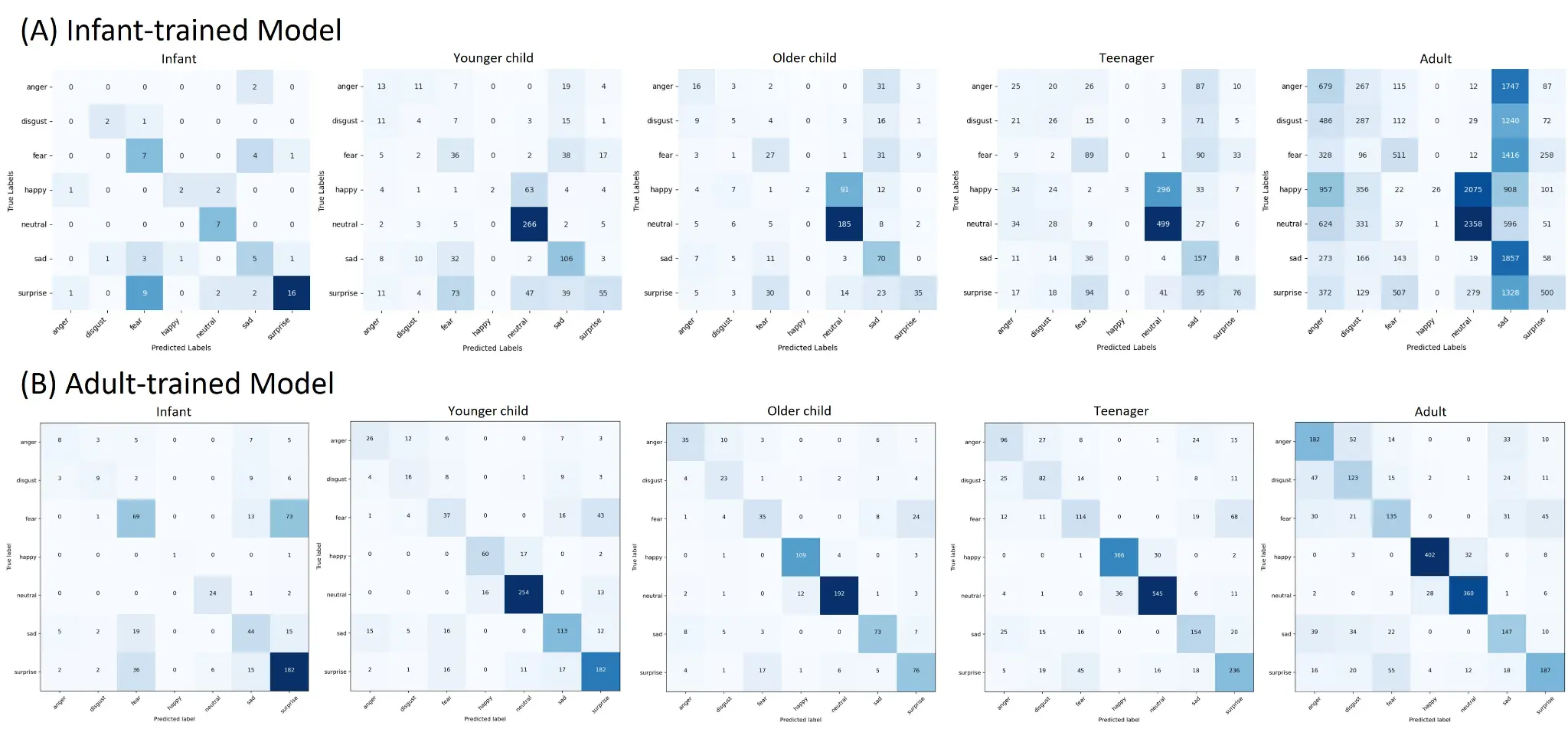
Even at its worst, the infant model stayed well above chance on adult faces — a core of expressive features survives the journey from infancy to adulthood. Confusion-matrix analysis surfaced developmental asymmetries: the infant model read surprise near-perfectly in its own domain, but conflated adult happiness with neutrality and sadness. The conclusion for the field: emotion-recognition systems should be age-aware — and deep learning can serve as a measurable complement to observational developmental psychology.
- University of Edinburgh
Next case study
07 / 11