Seeing in Point Clouds
Real-world 3D perception for robotic grasping
03
Year — 2025–26
Role
- MSc dissertation — University of Edinburgh
- Dataset & processing pipeline co-author
- Published in AI (MDPI), 2026
AI (MDPI) · Vol. 7 · 2026
Before a robot can grasp a specific product, it has to find it — not “a can,” but the exact item, even beside a near-identical lookalike. This work built MiniMarket80, a real-world benchmark of 96,000 colored point cloud scans across 80 supermarket objects, then stress-tested eleven state-of-the-art segmentation networks against real cluttered scenes. Networks scoring 99.7% in validation failed on a real table. That gap is the finding.
Problem
Robotic grasping research runs on datasets that are quietly unrealistic. CAD libraries are too pristine to survive a real sensor; existing scan collections lack texture, need exotic rigs, or use objects nobody else can buy. The benchmarks that 3D networks are tuned on are dominated by texture-less shapes — so models post impressive leaderboard numbers without ever being asked the question that matters for grasping: can you pick out one specific, textured item among visually similar distractors?
Approach
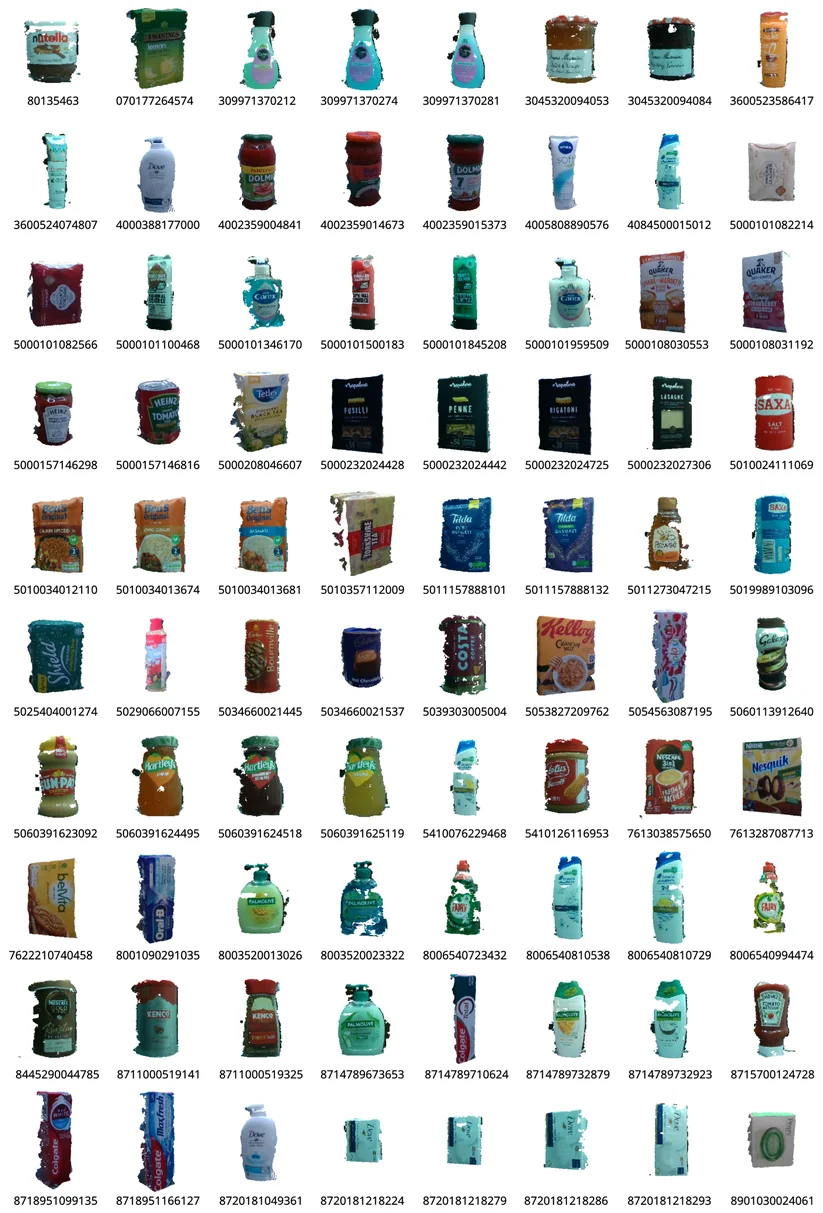
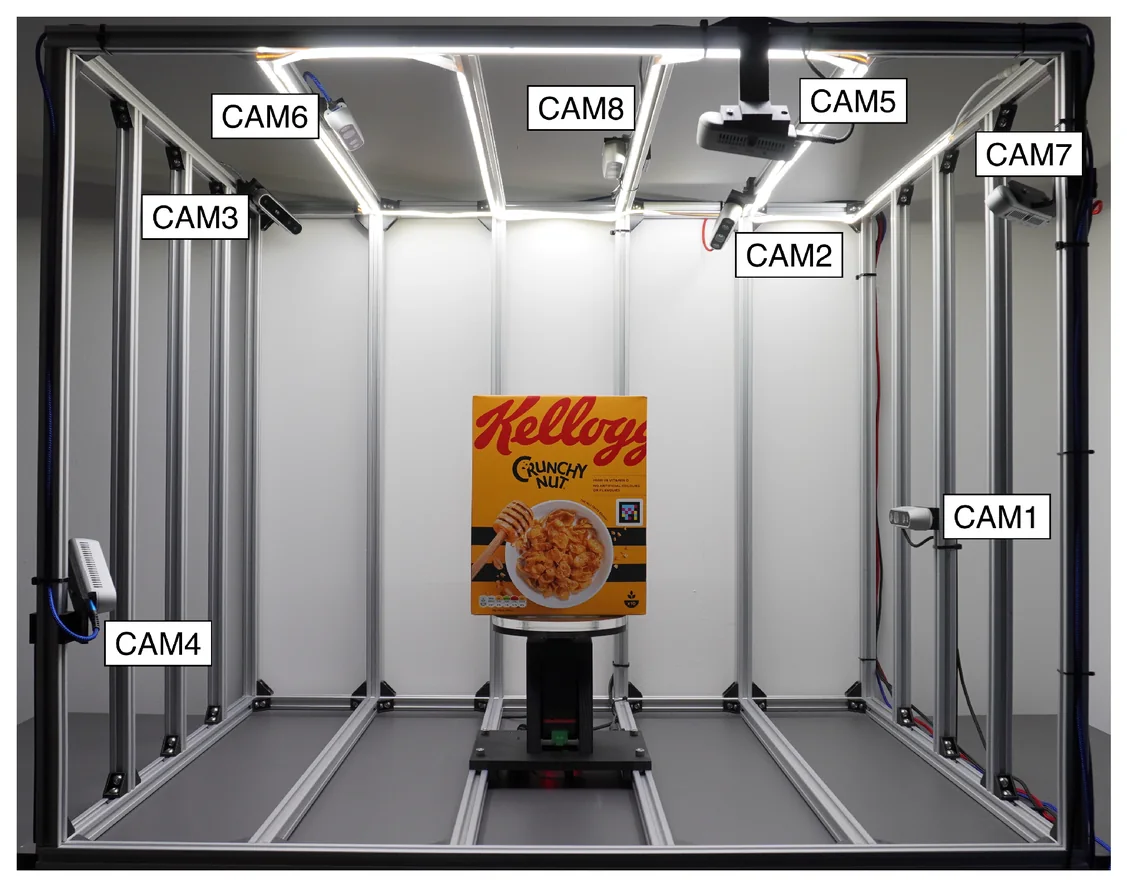
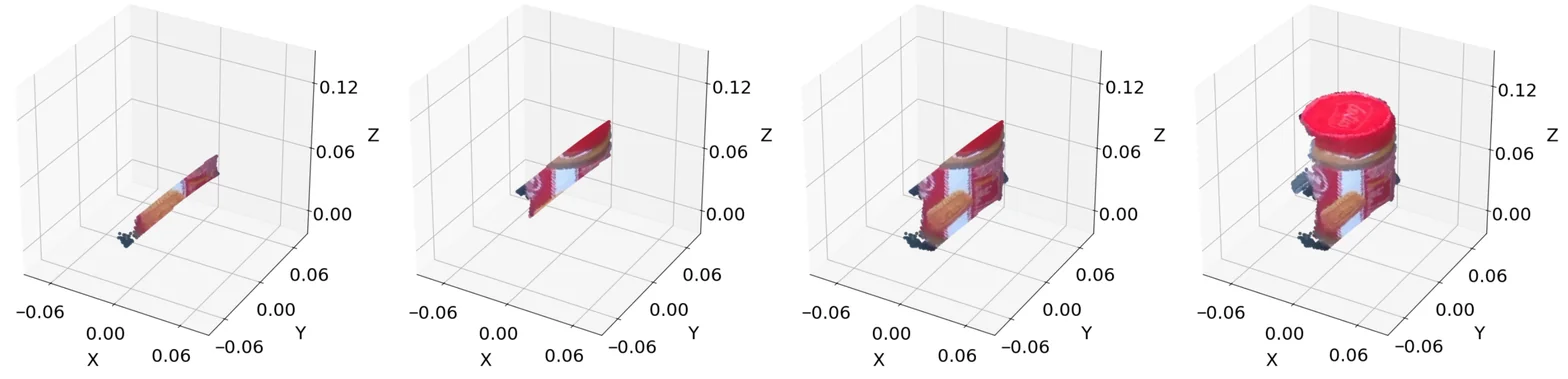
The design philosophy was radical reproducibility. Eighty standard grocery items, each identified by its EAN barcode so any lab in the world can rebuild the physical benchmark with a shopping list. Capture runs on the two most common depth cameras in robotics — no exotic scanners. At every 5-degree step of a motorized table, eight cameras fire under three lighting intensities, baking real sensor noise and light variation directly into 1,200 partial views per object.
A processing pipeline then composites targets with randomized distractor objects into labeled scenes at any resolution — including an adversarial test where the distractor shares the target’s shape, size, and dominant color, so only genuine texture understanding can tell them apart.
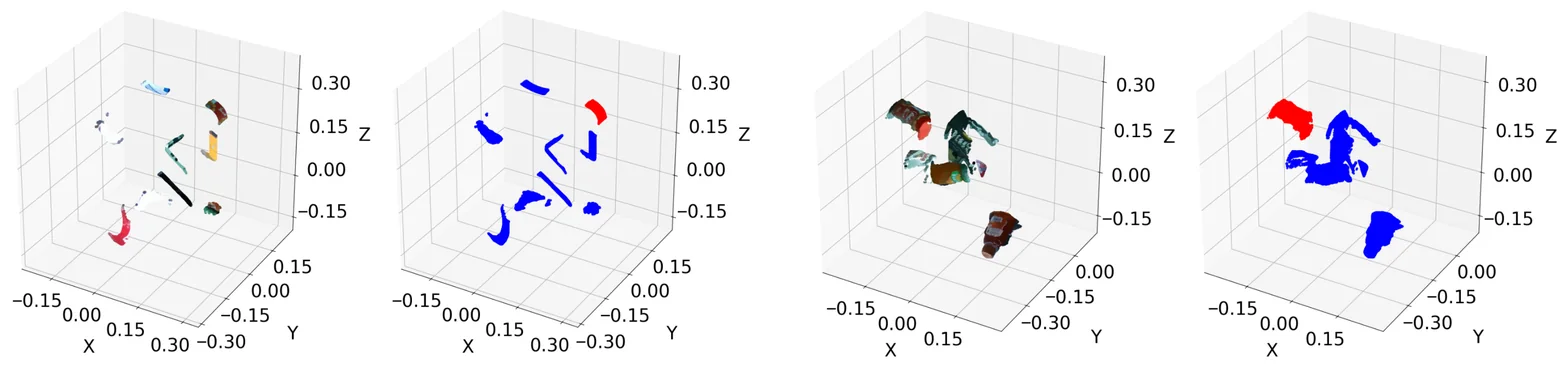
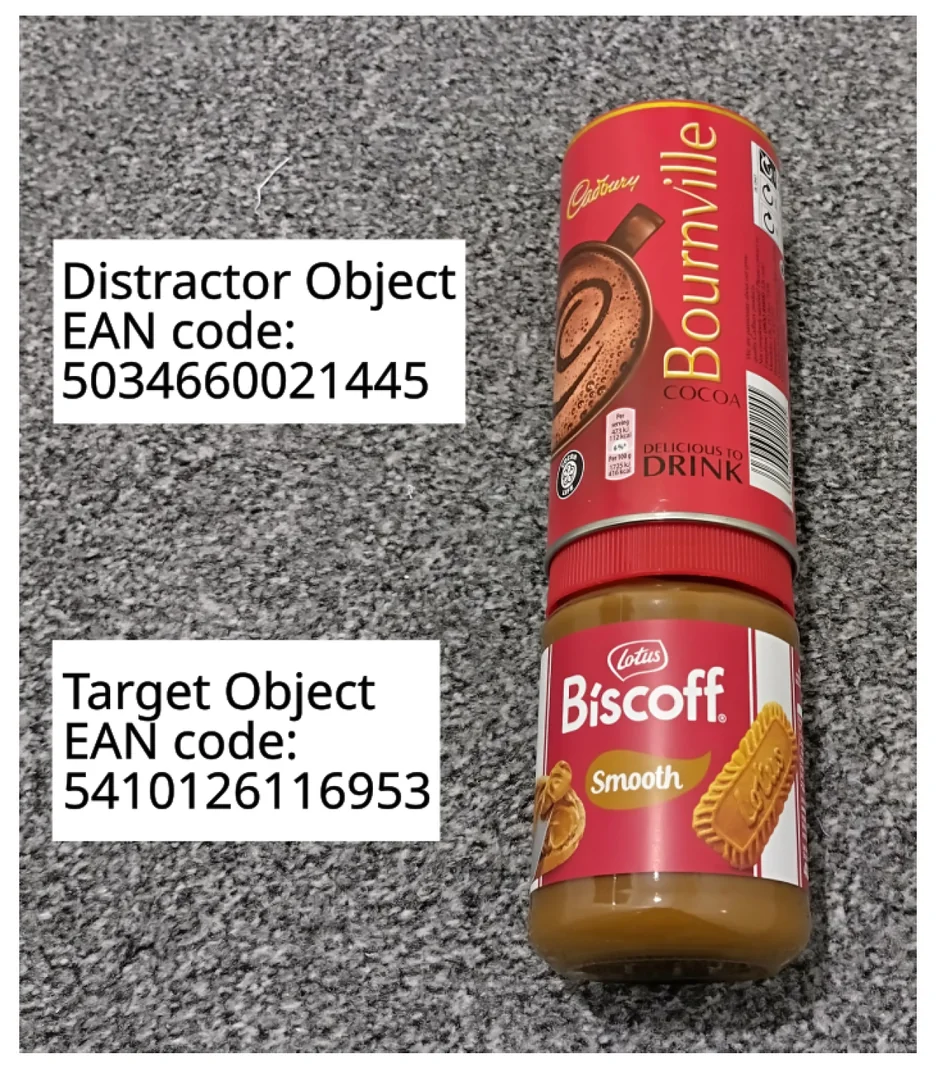
A network can ace validation at 99.7% and still fail to find a can of groceries on a real table.
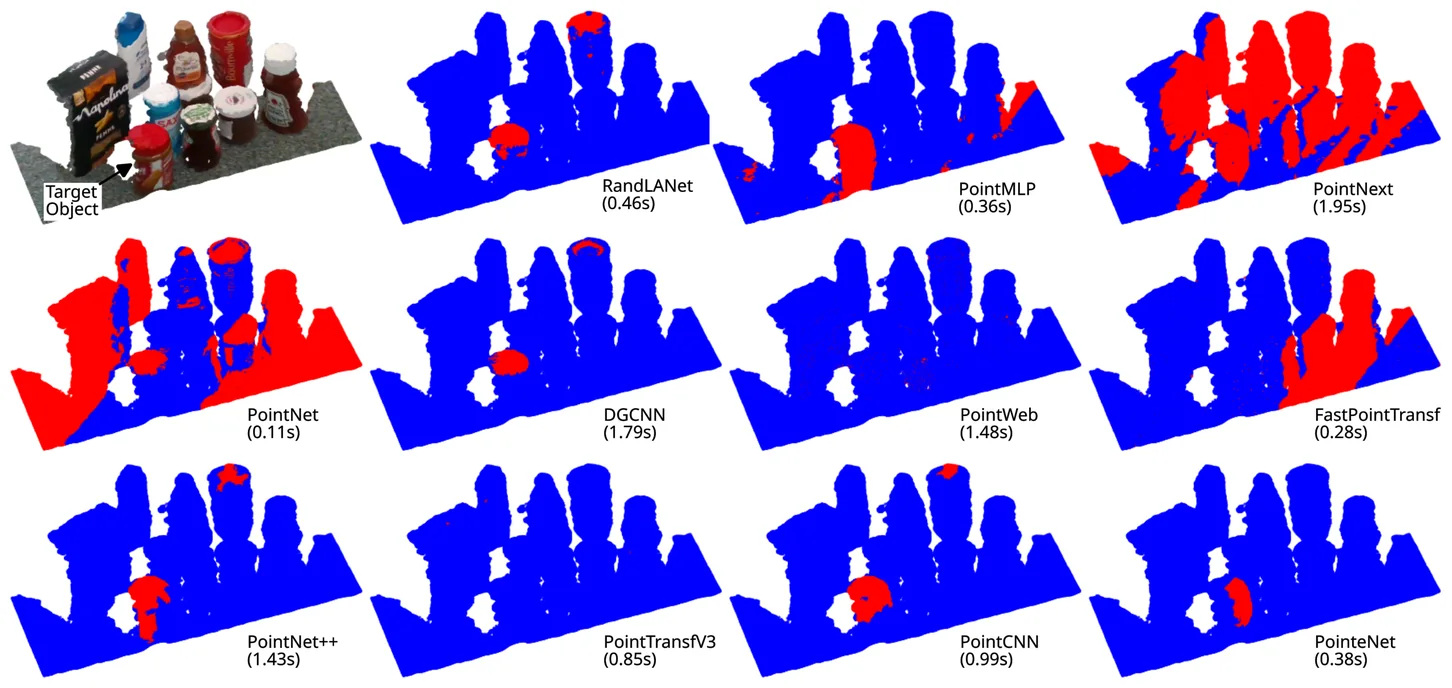
Findings
Only 4 of 11 architectures could even partially segment the target among distractors in the real world. The pattern was predictive: networks proven on shape-centric benchmarks transferred to texture-rich real data, while indoor-scene specialists — including celebrated transformer models — collapsed entirely.
A counterintuitive scaling result closed the study: feeding the networks larger samples made them both more accurate and 1.78× faster at inference.
Benchmark
- RGB-D scans collected
- 96,000
- Real grocery objects
- 80
- Views per object
- 1,200
- Networks benchmarked
- 11
- Best validation mIoU
- 99.7%
- Survived the real world
- 4 / 11
Dissertation
The MSc dissertation carried the question into deployment: a synthetic companion dataset of 12,000 cluttered scenes at a severe 1:9 class imbalance, three architectures trained in a unified PyTorch pipeline, and the best network compressed for real-time use. L1 pruning, INT8 quantisation, and knowledge distillation cut PointWeb’s per-scene latency from 1.91 to 1.77 seconds while preserving ~99% of its 0.986 validation mIoU.
- Insect Robotics Group, University of Edinburgh
Next case study
04 / 11